
A quick reality check before you spend another €35 on plastic and sugar.
Be honest: What was behind door 14 of your chocolate advent calendar last year? Exactly—you don’t remember. A few grams of animal-shaped chocolate, often with just a greasy glaze, wrapped in plastic that lasts longer than the contents taste good. After December 24, all that’s left is an empty box, a bag of plastic waste, and a sugar rush that no one remembers.
The “premium” versions often aren’t any better—just more expensive. Instead of plain chocolate, you get pralines; instead of a cardboard box, you get a slightly fancier cardboard box—but the throwaway mentality usually stays the same. You pay between 20 and 50 € for something that will be history by December 25.
What alternatives are actually out there?
If you’re tired of sugar and plastic, you now have a few options:
- The organic or Fairtrade chocolate calendar. The chocolate is of higher quality and produced more fairly—that’s a real step forward. But the basic concept remains largely the same: 24 days of snacking, and then you’re left with the box.
- The DIY calendar. Chocolates from the chocolatier, lovingly arranged in little cloth bags. It sounds nice, but it can easily end up costing more than a ready-made calendar—and, above all, it takes an entire afternoon.
- The plastic-free calendar. Some manufacturers have now stopped using plastic inserts and switched to paper. This reduces plastic use, but in the end, everything still ends up in the recycling bin.
- Enjoyment instead of sugar. The most exciting trend: calendars that don't focus on sweets, but on things you consciously savor and use up over the course of weeks, such as tea, coffee, or spices!
What a Good Calendar Should Offer
When you compare these alternatives side by side, it becomes clear what really matters: The content should provide enjoyment beyond just a fleeting moment; the packaging shouldn’t end up in the trash but should be reused; and the price should reflect what you’re actually getting. A calendar that meets all three of these criteria is surprisingly hard to find.
The solution: 24 jars instead of 24 servings of sugar
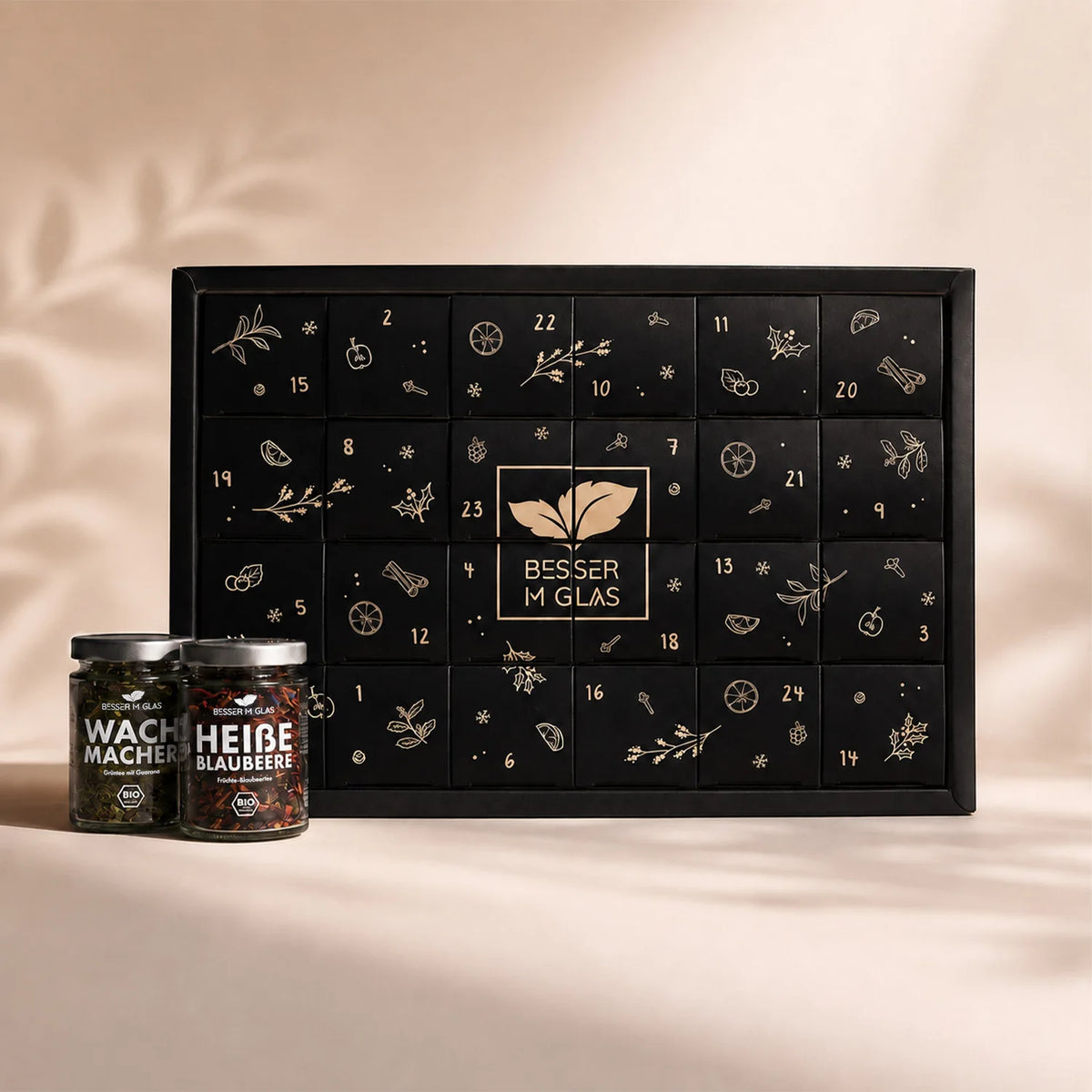
There’s an advent calendar that works completely differently: 24 real jars instead of disposable packaging, filled with organic tea instead of sugar glaze—which you can simply keep using, refill, and keep after the last door is opened.

The tea Advent calendar from Besser im Glas features 24 varieties (4 of which are brand-new) and is enough for about 240 cups of tea. At €89.90 instead of €141.60 (the sum of the individual prices), that works out to about €0.37 per cup. So instead of 24 pieces of chocolate, you’ll have tea to last for many weeks beyond Christmas.
More than 200,000 customers now rely on Besser im Glas, and the tea Advent calendar has been one of the brand’s best-selling products for years.
And yes: The jars are genuine storage jars. They’re not just a gimmick—they’re jars you can refill again and again instead of throwing them away.