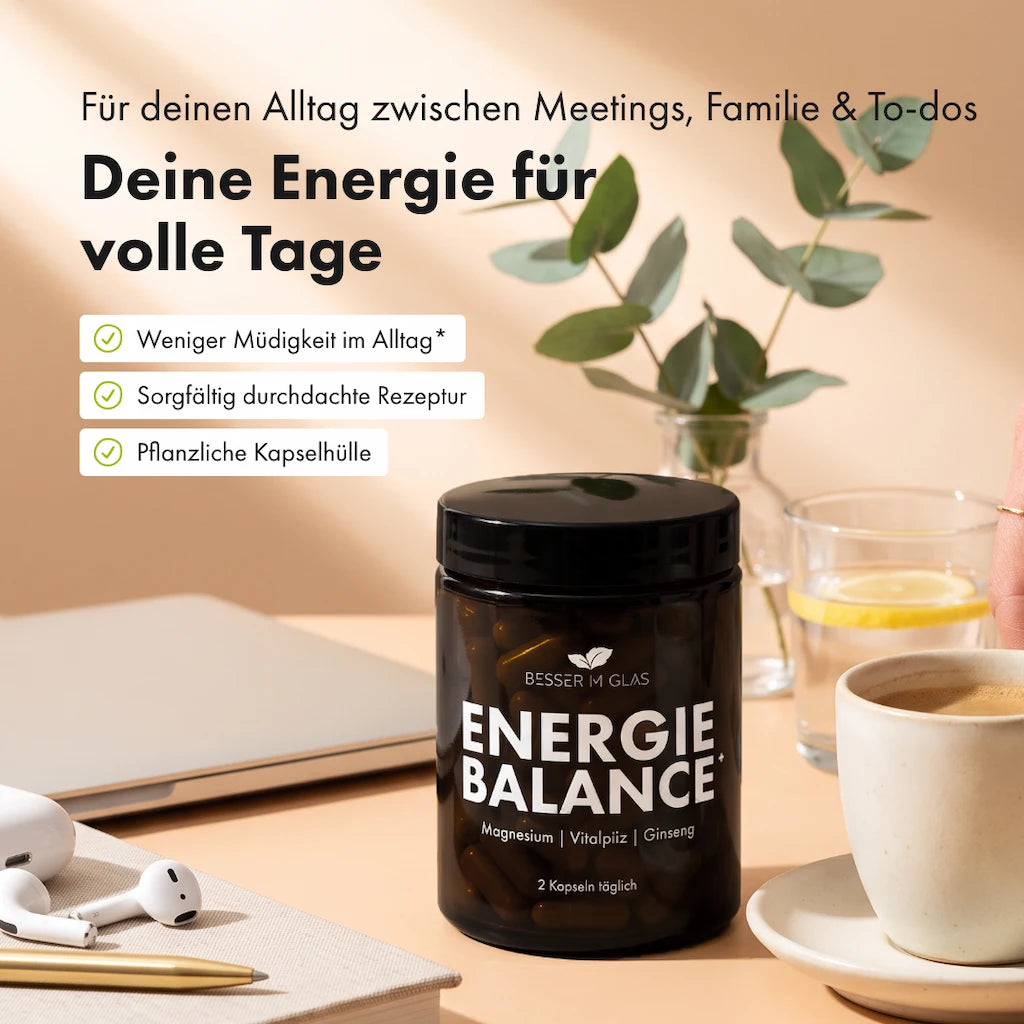






The alarm clock rings, the coffee has long since been drunk, and yet the day still feels like a mountain stage. A lack of energy rarely has a single cause. Often, it’s a combination of daily habits that add up over weeks, rather than a single, clearly identifiable trigger.
If you're looking for the cause, it's best to consider the entire week rather than a single day: sleep quality, fluid intake, physical activity, and stress levels all interact, and can only truly be improved when considered together.
6 Common Causes of Low Energy
Too little or irregular sleep. Fluctuating bedtimes disrupt the natural rhythm more than consistent, shorter sleep.
Not enough water. Even a slight fluid deficit can make you feel tired.
Blood sugar roller coaster. Lots of sugar and white flour cause rapid spikes and equally rapid drops.
Lack of exercise. Paradoxically, people who don't get enough exercise often feel more tired—not more energetic.
Constant stress. Chronic stress drains your reserves, even if it doesn't always feel like "stress."
Not enough fresh air and daylight. Daylight helps the body maintain its natural rhythm.
Small adjustments with a big impact
It’s usually not enough to make changes in just one area. A walk during your lunch break, an extra glass of water, regular meals—small changes add up. As a daily supplement, Energy Balance is designed to support normal energy metabolism* and can easily be incorporated into your morning routine.
The alarm goes off, the coffee’s long since been drunk—and yet the day still feels like a mountain stage. A lack of energy rarely has a single cause. Often, it’s a combination of daily habits that add up over weeks, rather than a single, clearly identifiable trigger.
If you're looking for the cause, it's best to consider the entire week rather than a single day: sleep quality, fluid intake, physical activity, and stress levels all interact—and can only truly be improved when considered together.
6 Common Causes of Low Energy
Too little or irregular sleep. Fluctuating sleep schedules disrupt the natural rhythm more than consistently shorter sleep.
Not enough water. Even a slight fluid deficit can make you feel tired.
Blood sugar roller coaster. Lots of sugar and white flour cause rapid spikes and equally rapid drops.
Lack of exercise. Paradoxically, people who don't get much exercise often feel more tired—not more energetic.
Constant stress. Chronic stress drains your reserves, even if it doesn't always feel like "stress."
Not enough fresh air and daylight. Daylight helps the body maintain its natural rhythm.
Small Adjustments with a Big Impact
It’s usually not enough to make changes in just one area. A walk during your lunch break, an extra glass of water, regular meals—small changes add up. As a daily supplement, Energy Balance is designed to support normal energy metabolism* and can easily be incorporated into your morning routine.
Frequently Asked Questions
Is constant fatigue always a sign of a deficiency?
Not necessarily—low energy can have many causes, ranging from sleep quality to stress. If you experience persistent, unexplained fatigue, it is advisable to see a doctor.
Does drinking more coffee help fight fatigue?
In the short term, yes; in the long term, too much caffeine can disrupt sleep and make you feel more tired the next day.
When should you see a doctor because of fatigue?
If fatigue persists for several weeks despite getting enough sleep, exercise, and fluids, it is advisable to see a doctor to rule out other causes.
Dietary supplements are not a substitute for a balanced and varied diet and a healthy lifestyle. Do not exceed the recommended daily intake.